When Do Kids Learn to Read? A Guide to Reading Milestones By Age

Watching your child learn to read is one of the most rewarding parts of parenting. It can also be one of the most anxious. When friends' kids start reading earlier, or when your own child seems to be struggling, it's natural to wonder: when do kids learn to read, and is my child on track?
Reading milestones develop in clear stages from birth, and every child moves through them at their own pace.
This guide walks through the key stages of learning to read, from babies through to school-age children. Use it to know what to expect at each age, spot the skills your child is building, and find simple ways to help at home.
When do kids learn to read?
Most kids learn to read between ages 6 and 7, around first or second grade in the U.S., Year 1 and Year 2 in Australia, and Year 2 and Year 3 in the U.K. Some pick it up earlier, by age 4 or 5. Others take a little longer, and that's okay too. Reading is a skill that develops in stages from birth, with each age bringing its own milestones.
Children become readers step by step over their first six years. There's no single "right" age. What matters more is recognising where your child is on the journey and how you can support them there.
Reading milestones by age
Quick Reference
Babies (0 to 12 months): respond to voices and lullabies
Toddlers (ages 1 to 2): name pictures in their favourite books
Preschoolers (ages 3 to 4): make up rhymes and start to recognise letters
Age 5: match letters to sounds and start decoding
Ages 6 to 7: read with growing fluency
Ages 8 to 10: shift from learning to read to reading to learn
Here's what to expect at each age, plus simple ways to support your child along the way.
Babies (0 to 12 months)
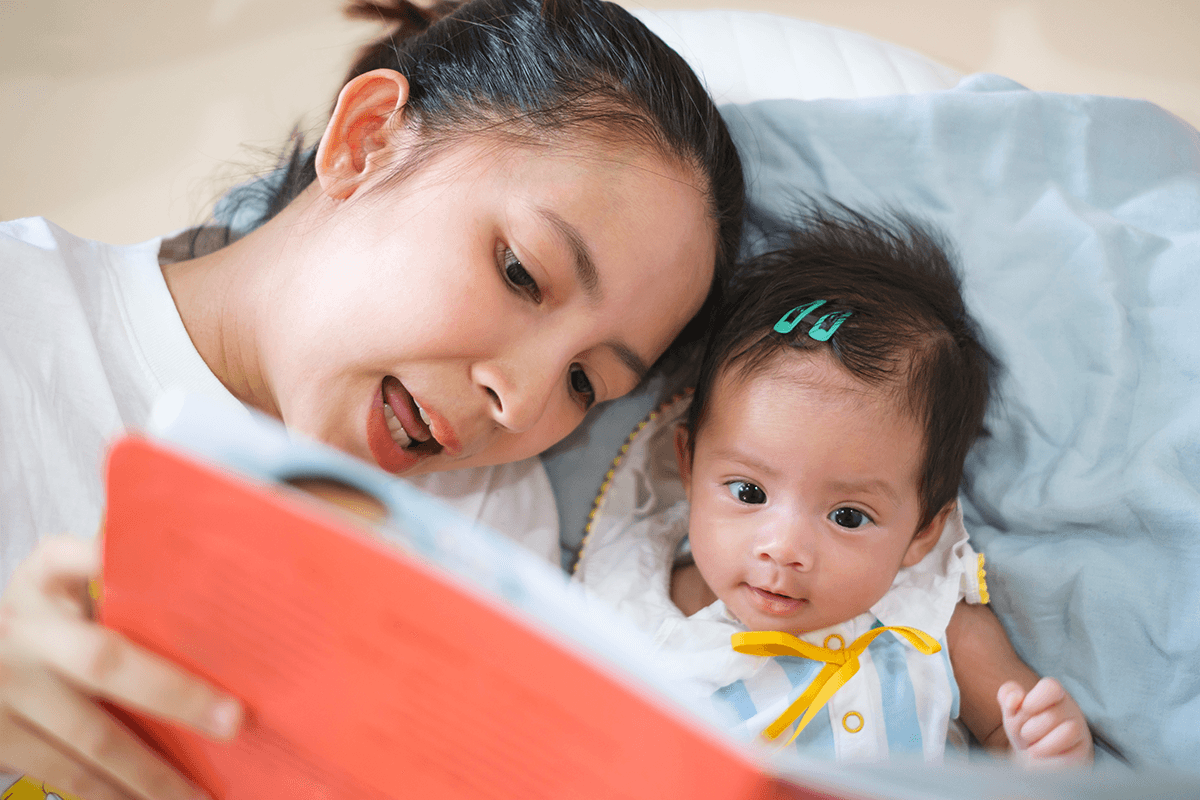
What your baby is starting to do:
Respond to lullabies, nursery rhymes and sing-song speech
Respond to your voice with coos, smiles or babbles when you read aloud
Look at and touch pictures in board books or soft books
Help turn pages, or chew on them (both count at this age).
How to support their development at this age: Read aloud every day, even for just a few minutes. Talk to your baby often. Sing nursery rhymes and lullabies. At this stage the goal isn't comprehension – it's building a love of voices, books and language.
Toddlers (ages 1 to 2)
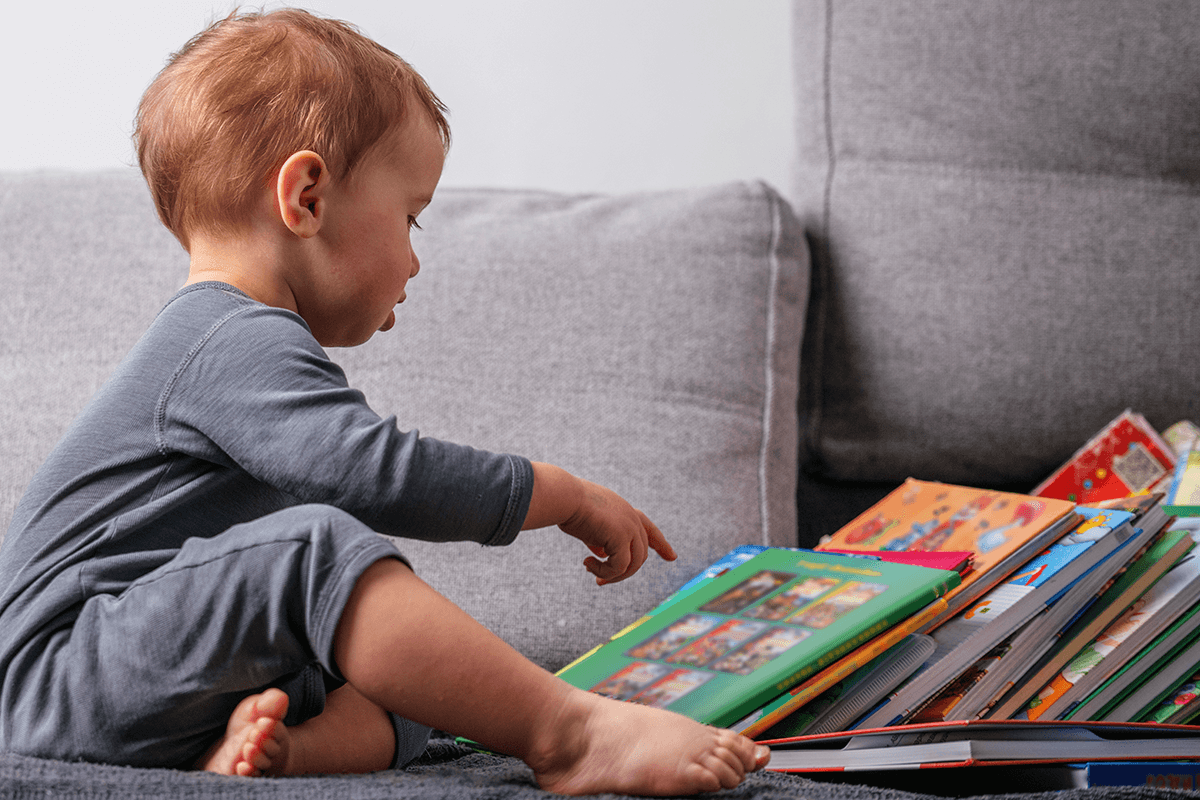
Recognising the covers of books they love and asking you to re-read their favourites are typical reading milestones for toddlers. Access hundreds of e-books for toddlers free for 30 days in Reading Eggs Junior.
What your toddler is starting to do:
Hear and respond to rhymes, songs and the patterns of language (phonological awareness)
Ask for favourite books to be read again and again
Recognise the covers of books they love
Point to and name familiar pictures, like cup, dog or baby
Answer simple questions about pictures ("Where's the dog?")
Fill in familiar words or phrases from favourite books
Hold a book the right way up and turn pages one at a time
Pretend to read by turning pages and making up stories.
How to support their development at this age: Re-read favourites as often as your toddler asks – the repetition is doing real work. Ask "what's that?" as you point to pictures. Let them turn pages and hold the book themselves. Build their cognitive abilities and fine motor skills with matching games designed especially for toddlers.
Preschoolers (ages 3 to 4)
What your preschooler is learning to do:
Notice words that rhyme, like ‘cat’ and ‘hat’
Make up their own rhymes, even nonsense ones
Start hearing the first sound in familiar words, like the /s/ in 'sun' (phonemic awareness)
Recognise some letters of the alphabet, especially those in their own name
Recognise their own name in print, plus some common words in their environment like ‘stop’
Understand that words are read from left to right and top to bottom (print awareness)
Retell familiar stories in their own words.
How to support their development at this age: Play rhyming games and sing along with songs. Point out letters you see together on signs, cereal boxes and menus, and play alphabet games that incorporate sensory activities. Run your finger along the words as you read so your child sees how print works. Try these fun preschool learning activities at home.
Further reading:
Age 5
For most kids, age 5 is the start of formal schooling – Kindergarten in the U.S. and Canada, Prep or Foundation in most of Australia, and the year after Reception in the U.K. This is when structured reading instruction usually begins.
What your 5-year-old is learning to do:
Hear the beginning, middle and end sounds in simple words like ‘dog’ or ‘sit’
Start matching some letters to their sounds (e.g. B makes the /b/ sound) (phonics)
Recognise most letters of the alphabet, uppercase and lowercase
Blend sounds together to read simple CVC (consonant-vowel-consonant) words like ‘cat’, ‘big’ or ‘sun’
Recognise some common words by sight, without sounding them out (sight words)
Retell a story in order
Answer who, what, where, when and why questions about a book
Predict what might happen next in a story.
How to support their development at this age: This is when formal phonics instruction usually begins at school. At home, incorporate phonics games to practise sounding out simple words together and play a variety of sight word activities. Keep reading aloud, because kids who can sound out words still benefit hugely from hearing more complex stories and building their vocabulary. Ask open questions about the books you read together.
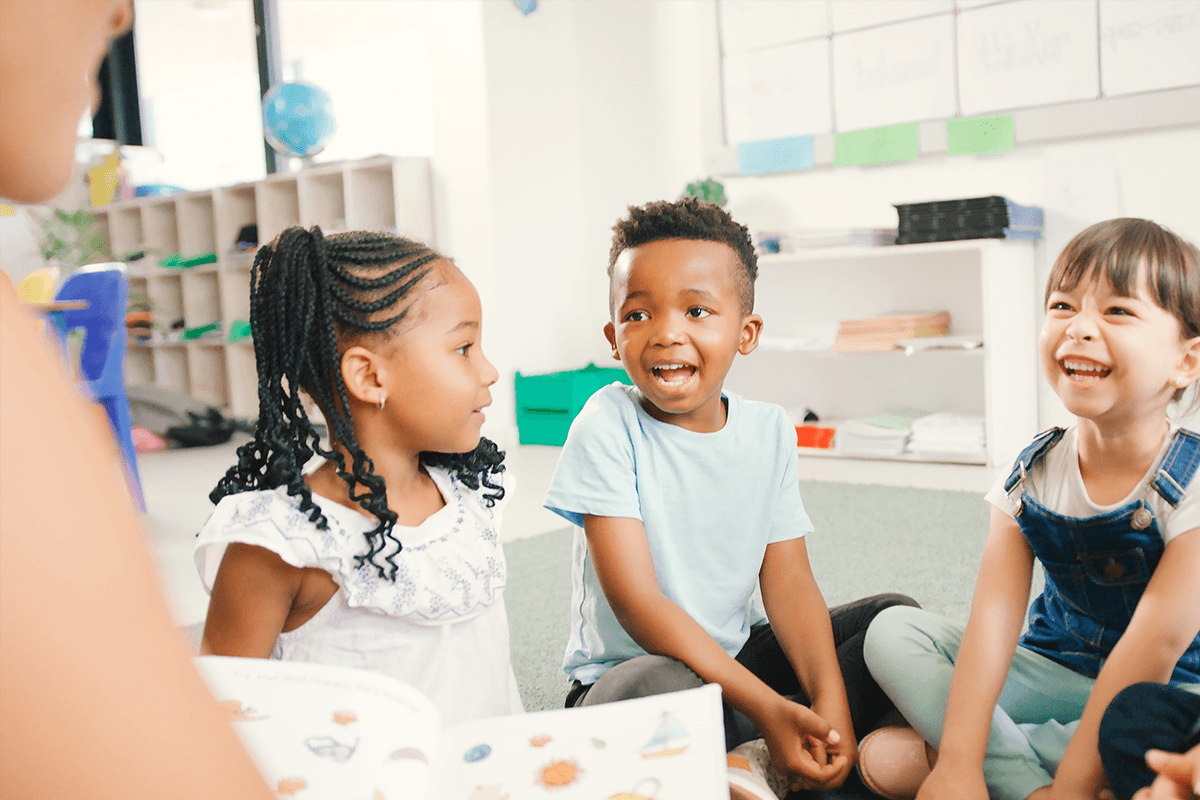
Whatever stage your child is at, don’t forget to celebrate their progress with reading rewards so they’re encouraged to keep building on their skills.
Ages 6 to 7
These are the first grade and second grade years in the U.S., Year 1 and Year 2 in Australia, and Year 2 and Year 3 in the U.K. This is the stage where most kids start to read independently.
What your child is learning to do:
Decode more complex patterns like digraphs (sh, ch, th), blends (st, bl, tr), long vowels and silent E
Sound out unfamiliar words using letter patterns and context
Play with sounds in words by adding, removing or swapping them (changing ‘cat' to 'bat' to 'sat') (phoneme manipulation)
Recognise a growing number of common sight words automatically
Read simple stories on their own
Read with growing fluency and expression, not just word by word
Follow a story from start to finish and tell you what happened.
How to support their development at this age: Have your child read aloud to you every day, even just for ten minutes. Choose books slightly easier than their reading level for fluency practice, and slightly harder ones to read together. If they get stuck, model sounding the word out rather than just giving them the answer.
Ages 8 to 10
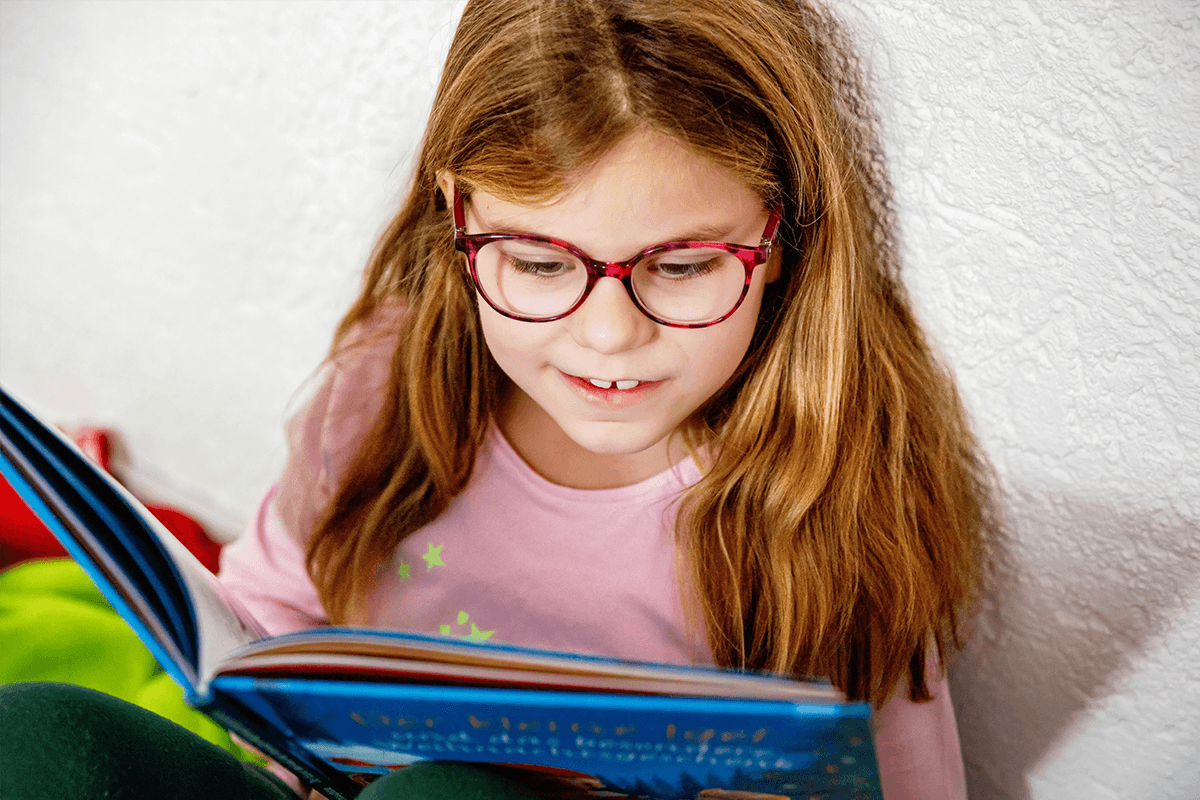
From around third grade in the U.S. (Year 3 in Australia, Year 4 in the U.K.), most kids shift from 'learning to read' to 'reading to learn'.
What your child is learning to do:
Read longer words by breaking them into syllables and recognisable parts
Use prefixes, suffixes and root words to work out meaning (like un-, -ful and help in 'unhelpful')
Read for different purposes (enjoyment, learning, following instructions)
Explore different genres including chapter books, non-fiction and poetry
Identify themes and analyse how characters, settings and plot work together in a story
Understand figurative language like similes and metaphors
Make inferences and pick up on meanings the author doesn't say directly
Compare information across different texts
Read for sustained periods independently.
How to support their development at this age: Let your child pick what they read. Interest drives volume, and volume drives skill. Keep reading aloud together, even with strong readers. Talk about what they're reading, ask their opinions, and treat books as conversation starters and build their reading comprehension skills. Follow the five finger rule to help your child choose ‘just right’ books for their reading level.
Ask open-ended questions about what they're reading – what surprised them, what they think might happen next, what they liked about a character. Reading and comprehension now develop together.
What if your child isn't reading "on schedule"?
It's important to remember that every child learns at their own pace. A child who isn't reading by age 5 isn't behind. A child who's reading at 4 isn't guaranteed to stay ahead. The typical reading milestone age ranges are guides, not deadlines.
That said, first and second grade in the U.S., Year 1 and Year 2 in Australia, and Year 2 and Year 3 in the U.K., are key years to watch closely. If decoding hasn't started to click by the end of first grade (end of Year 1 in Australia, end of Year 2 in the U.K.), it's worth raising with your child's teacher, doctor or a reading specialist. Early support makes a meaningful difference.
If your child seems frustrated with reading, dislikes it, or doesn't seem to be progressing, trust your instincts and ask for an assessment. Reading challenges are common, and they're very treatable when caught early.
How Reading Eggs supports your child's reading milestones
Reading Eggs supports your child's reading journey from ages 2–13. Free trial
Reading Eggs supports your child from first sounds to advanced reading comprehension, growing with them from age 2 to 13.
The multi-award winning program is created by education experts and backed by proven reading research. With thousands of self-paced lessons and 4,000+ e-books, Reading Eggs covers all five components of reading – phonemic awareness, phonics, fluency, vocabulary and comprehension – and is designed to take your child from learning to read to reading to learn. 93% of children improve by at least one whole reading level in just 6 weeks. And 91% of parents see a difference in the first few weeks.
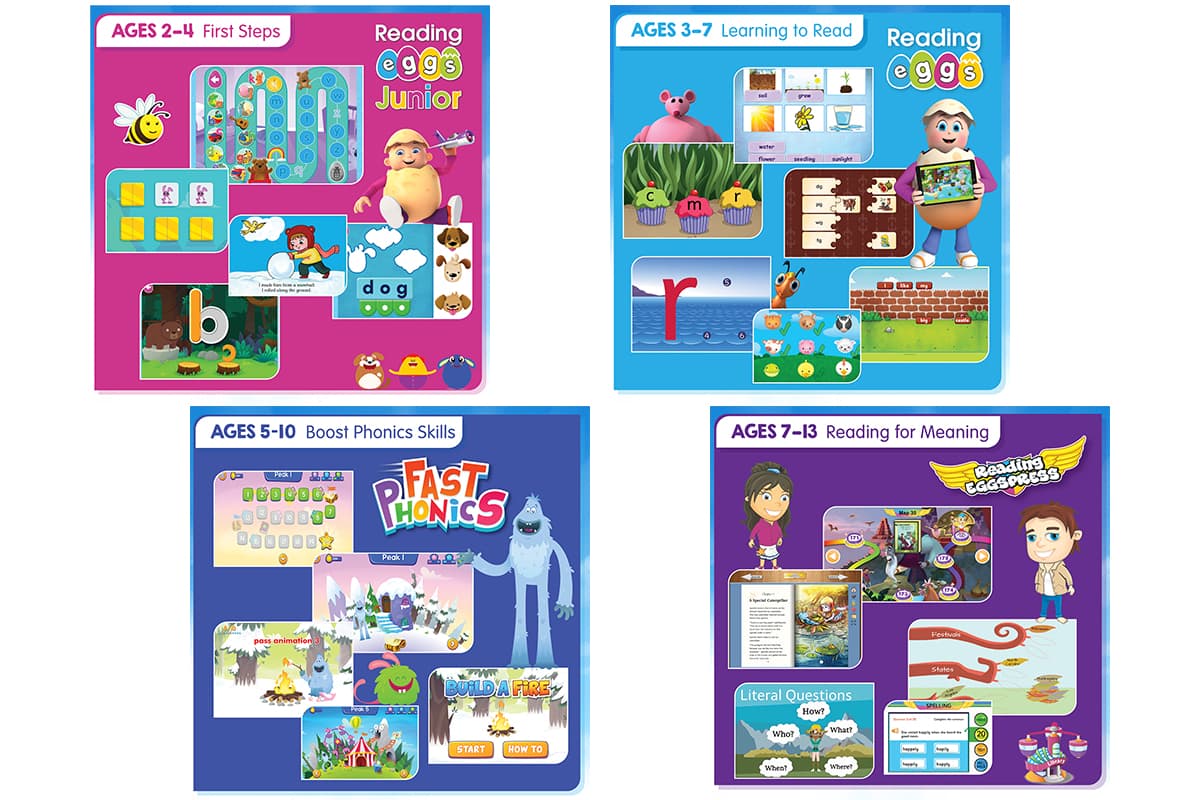
The Reading Eggs suite of programs supports the full reading journey:
Reading Eggs Junior (ages 2–4) – early reading and pre-literacy skills
Reading Eggs (ages 3–7) – the core program covering phonics, sight words and early reading
Fast Phonics (ages 5-10) – our dedicated systematic, synthetic phonics program
Reading Eggspress (ages 7–13) – comprehension, fluency and reading to learn.
Reading Eggs, Fast Phonics and Reading Eggspress each start with a placement test, so your child works at the level that's right for them. Game-like lessons teach the specific skills they're working on at each milestone and the online Library lets kids read independently at their own pace. Quizzes, virtual rewards and certificates celebrate their step-by-step achievements, and you'll be able to track their progress with automated reports.
Start your 30-day free trial of Reading Eggs

You might also like


Discover Topics

